
What we arrange
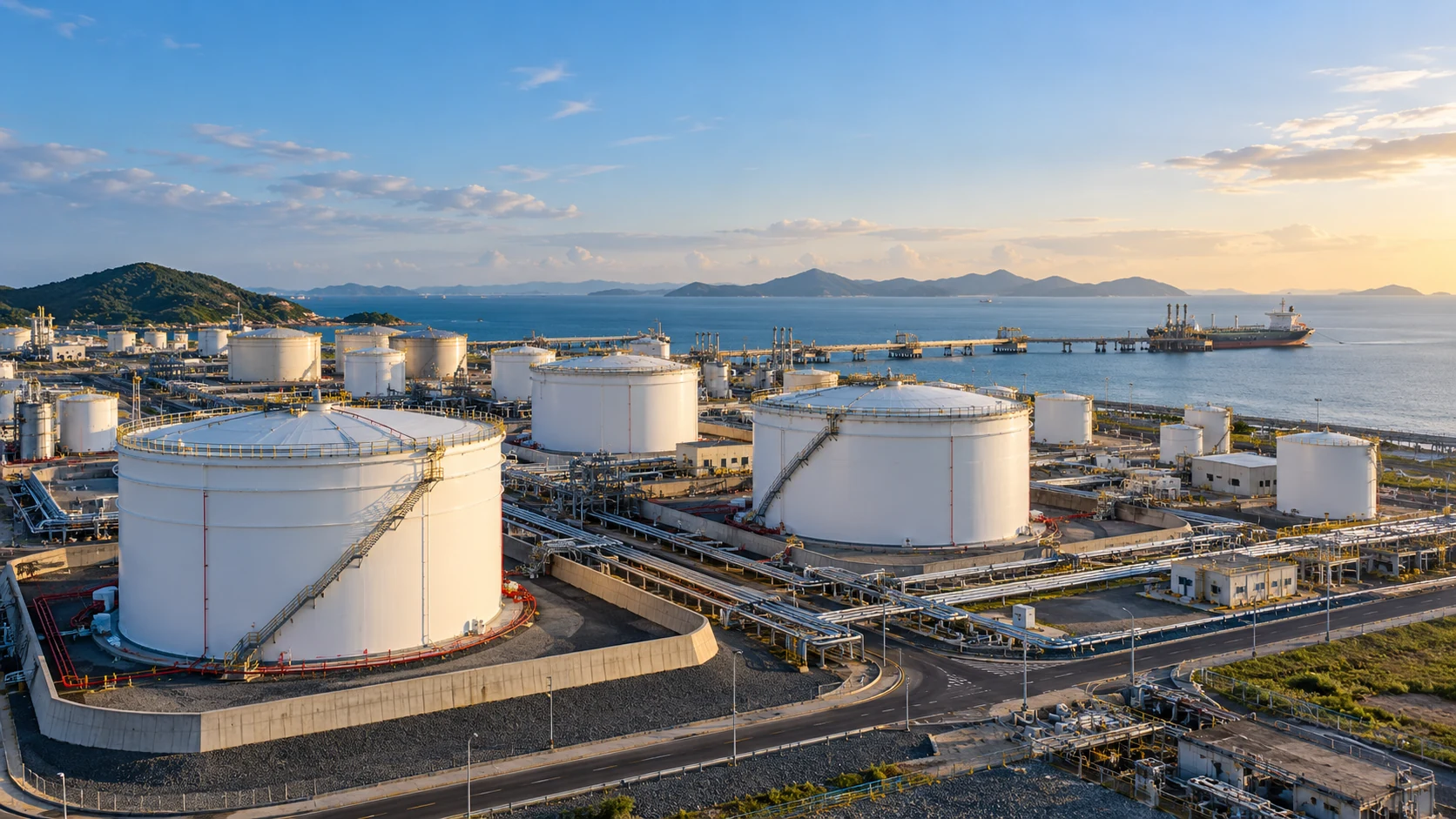
We arrange tank storage at third-party terminals, transfers between tank, vessel, pipeline and truck, and a schedule that matches the delivery terms of the contract.
Storage gives a trade time and a fixed place. Product held in a terminal tank can be measured, sampled and inspected before title passes, which is why many trades are built around it.
From shore tank to receiving tank
- Shore tankGauged and sampled before transfer
- Terminal lines and pumpsProduct moved to the jetty
- Loading armConnected to the vessel's manifold
- VesselQuantity checked on board after loading
- Discharge terminalSampled again on arrival
- Receiving tankFinal quantity measured
Scheduling
A terminal serves many customers, and a vessel's time is costly. Loading windows, berth availability and tank space have to line up, or one party pays for the delay.
We agree the schedule with the terminal and the carrier before terms are signed, so that quality checks and payment can follow it.
What we do not own
We do not own terminals, tanks, pipelines or vessels. Storage and transport are provided by their operators, under the operators' own agreements and terminal rules.
Questions we are asked
Does Yorkwell own storage tanks?
No. Storage is provided by third-party terminal operators.
Can product in storage be inspected?
Yes. Product in a third-party terminal can be sampled and gauged by an independent inspector under the terminal's rules.
Who pays for storage?
Storage and handling costs are allocated in the contract.