Diesel EN590 10ppm
Ultra-low-sulfur diesel to the European EN 590 standard, with a maximum of 10 ppm sulfur.
SpecificationStandard EN 590. Sulfur 10 mg/kg maximum.

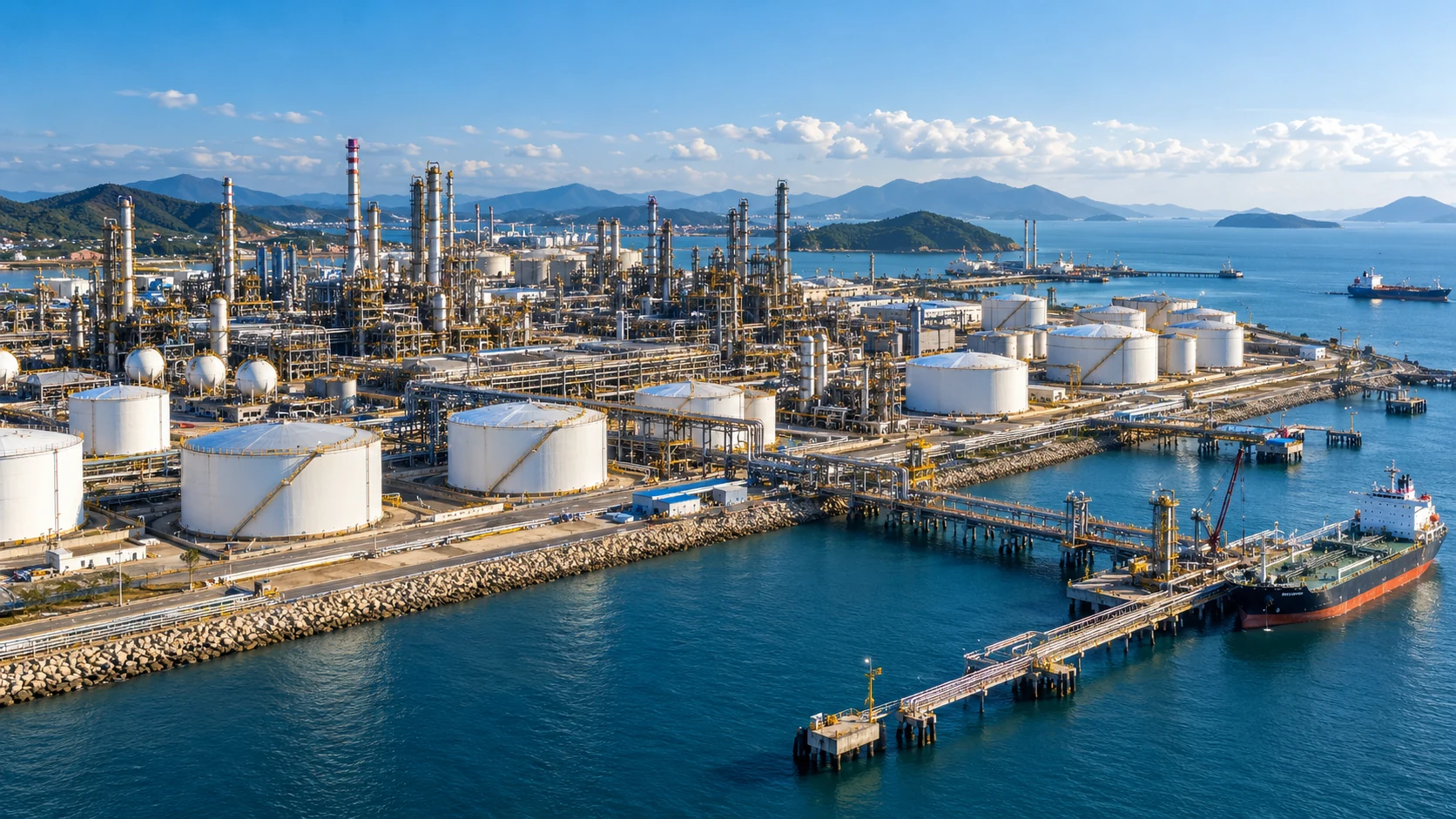
Yorkwell Petroleum buys, sells and brokers crude oil, refined products and gas for qualified commercial counterparties.
Our range runs from crude oil to the refined products made from it: diesel, gasoline, jet fuel, fuel oil and marine gas oil. We also handle LNG and LPG.
Petroleum products are sold by specification. A buyer of diesel is buying a product that meets EN 590, and a buyer of jet fuel is buying one that meets the aviation standard named in the contract. The specification for each product is listed below.
Ultra-low-sulfur diesel to the European EN 590 standard, with a maximum of 10 ppm sulfur.
SpecificationStandard EN 590. Sulfur 10 mg/kg maximum.
Gas oil with a maximum sulfur content of 50 ppm.
SpecificationSulfur 50 ppm maximum. Other properties as agreed in the contract.
Aviation turbine fuel for civil jet aircraft.
SpecificationAs named in the contract, commonly ASTM D1655 or DEF STAN 91-091.
Gasoline with a research octane number of 98.
SpecificationRON 98 minimum. Other properties as agreed in the contract.
Gasoline with a research octane number of 95.
SpecificationRON 95 minimum. Other properties as agreed in the contract.
Gasoline with a research octane number of 92.
SpecificationRON 92 minimum. Other properties as agreed in the contract.
Residual fuel oil for marine and industrial use.
SpecificationViscosity, sulfur and density as agreed in the contract.
Liquefied natural gas and liquefied petroleum gas.
SpecificationComposition and delivery method as agreed in the contract.
Crude oil, by grade and origin.
SpecificationGrade, origin, API gravity and sulfur content as agreed in the contract.
Distillate marine fuel for ship engines.
SpecificationAs named in the contract, commonly ISO 8217 grade DMA.
Supply is subject to availability, specification and contract terms. Grade standards and delivery terms are confirmed in writing for each trade.
Delivery terms decide where risk and cost pass from seller to buyer. They follow Incoterms such as FOB, CIF or DAP, as agreed in the contract.
The terms also settle who arranges the vessel or truck, who insures the cargo and where the product is inspected. We set these out in writing before a contract is signed.
LNG is natural gas cooled to about minus 162 degrees Celsius so that it can be shipped as a liquid. LPG, mainly propane and butane, is stored under pressure or refrigeration.
Both are traded on composition and on the delivery method, which is fixed by the terminals at each end of the voyage.
A trade also needs a counterparty, a payment structure, somewhere to hold the product and proof of its quality. We work on each: brokerage, trade finance, storage and logistics and quality assurance.
The terms used in a trade, from FOB to laytime, are explained in our glossary.
No. Price depends on the market, the product, the volume and the delivery terms. We quote in writing for each inquiry.
Quantities are agreed for each trade. Tell us the volume you need and the delivery window, and we will say what can be done.
The company name and registration details, the product and specification, the quantity, the destination and the timing. Further documents are agreed as the trade moves forward.
Tell us the product, quantity, destination and timing, and we will reply in writing.